
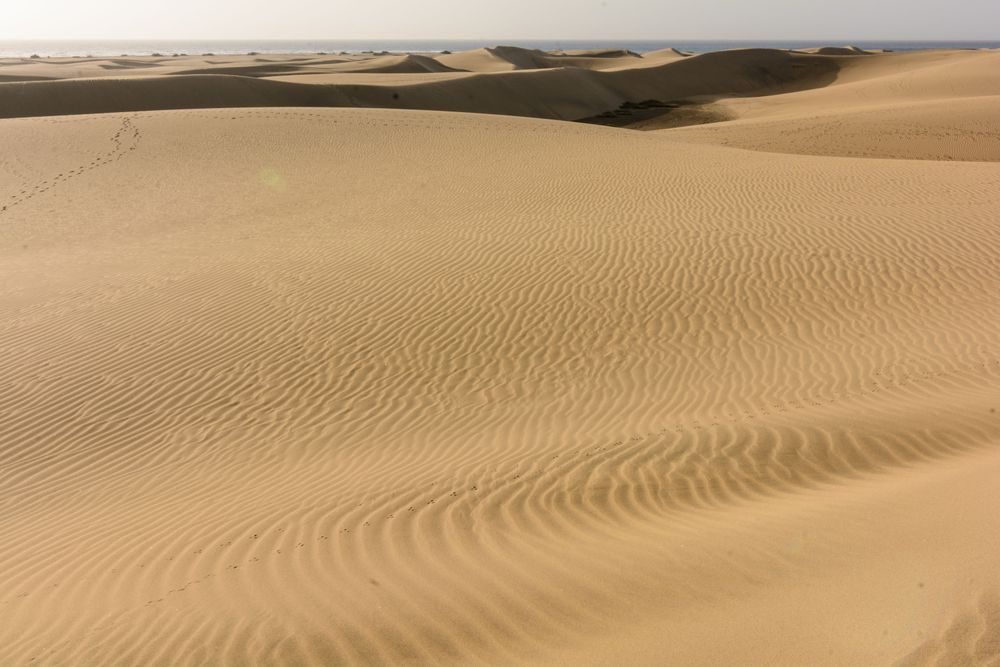
A Living System
The Maspalomas Dunes are not a static landscape; they are a living system, an organism of sand and wind that breathes with the Atlantic.
What you need to know before you visit
The Maspalomas Dunes Special Nature Reserve is not just a picture-postcard landscape; it is a living, ever-changing system that requires a mindful eye to be appreciated in all its complexity.
Before venturing into its sands, it is essential to understand that we are dealing with a fragile ecosystem where every dune, every shrub and every bird plays a crucial role in a balance that has been maintained for millennia, but which today faces unprecedented challenges.
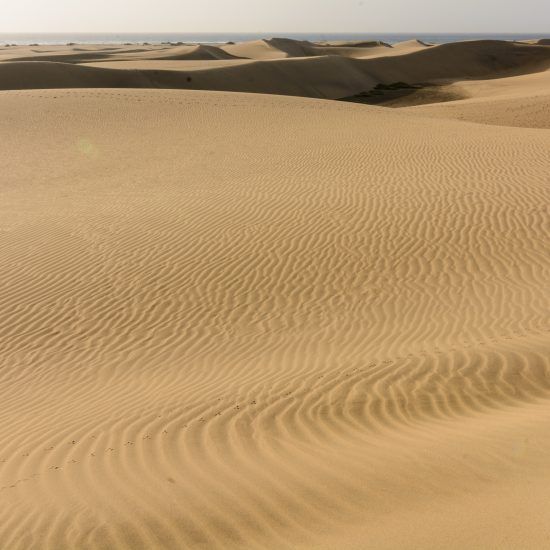
Sanctuaries of the Reserve
Four key locations that define the identity of Maspalomas, from the sea horizon to the refuge of the palm grove.
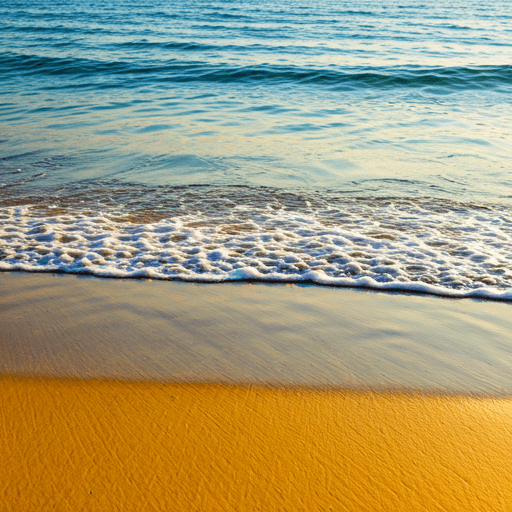
The Lighthouse
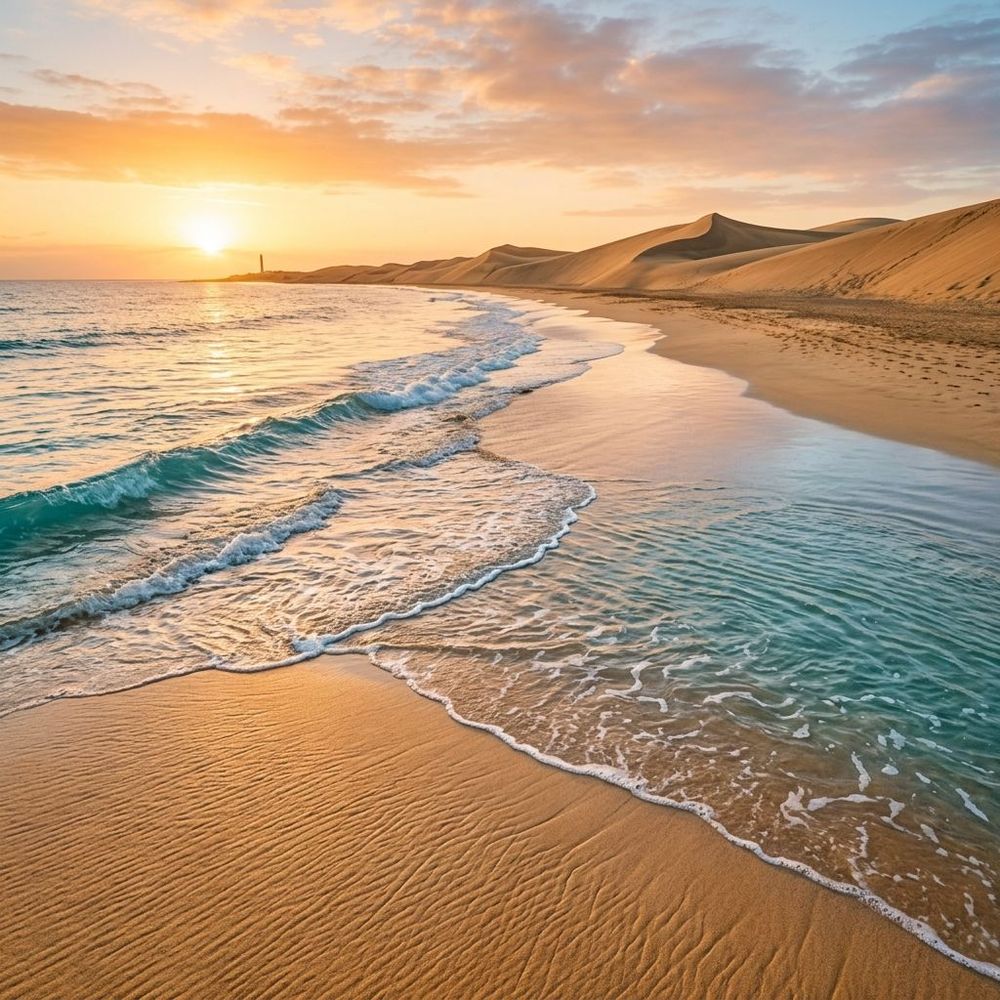
The threshold where the ocean delivers its mineral offering to the island and the story begins.
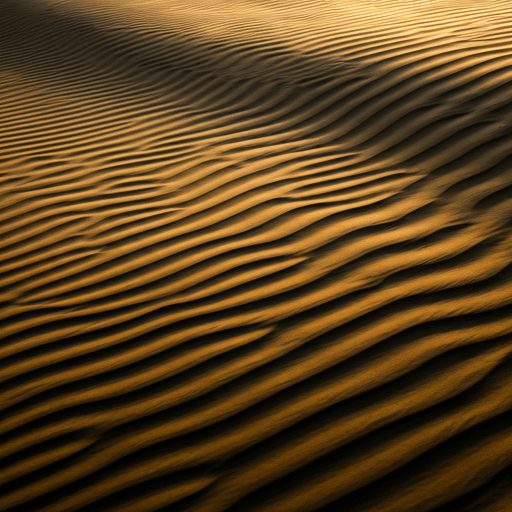
The Dunes
The changing architecture of the landscape, sculpted by the trade winds and time.
La Charca
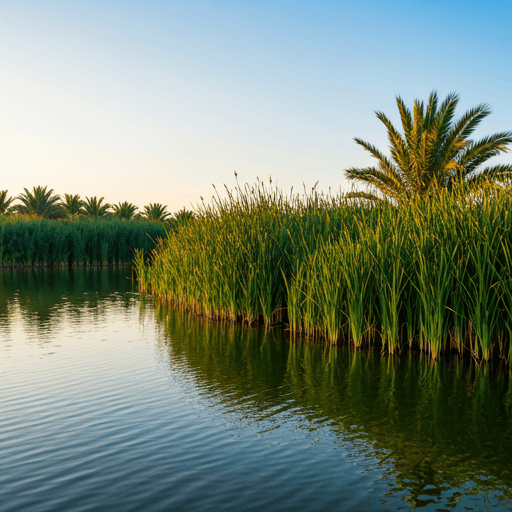
An oasis of brackish water, a vital refuge for migratory birds from Europe to Africa.
Tony Gallardo Park
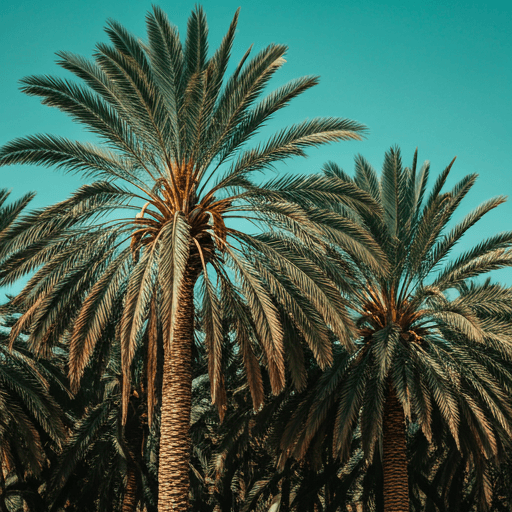
The palm grove that marks the boundary of the desert and the beginning of settled life.
What are dunes?

A unique natural area
THE SAND
CYCLE
A Balanced Ecosystem at Risk

The trail of time
The Nativity
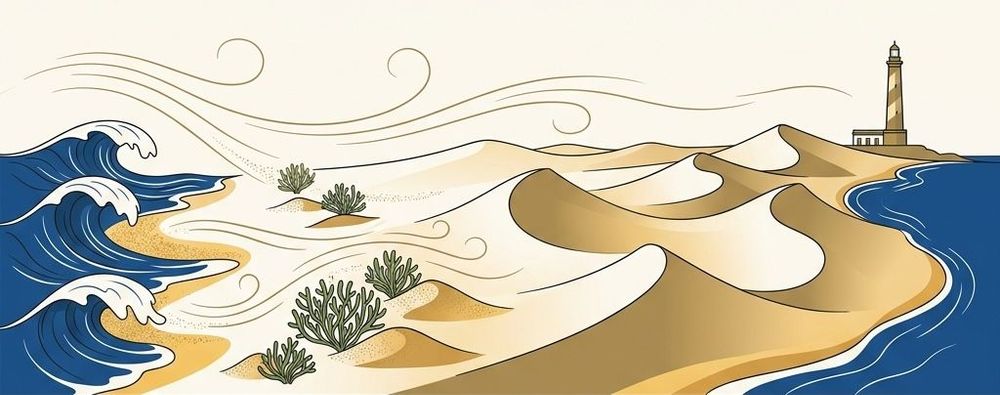
Sea currents deposit sand on the shore. Once dry, the wind blows it inland, forming a coastal dune or foredune.
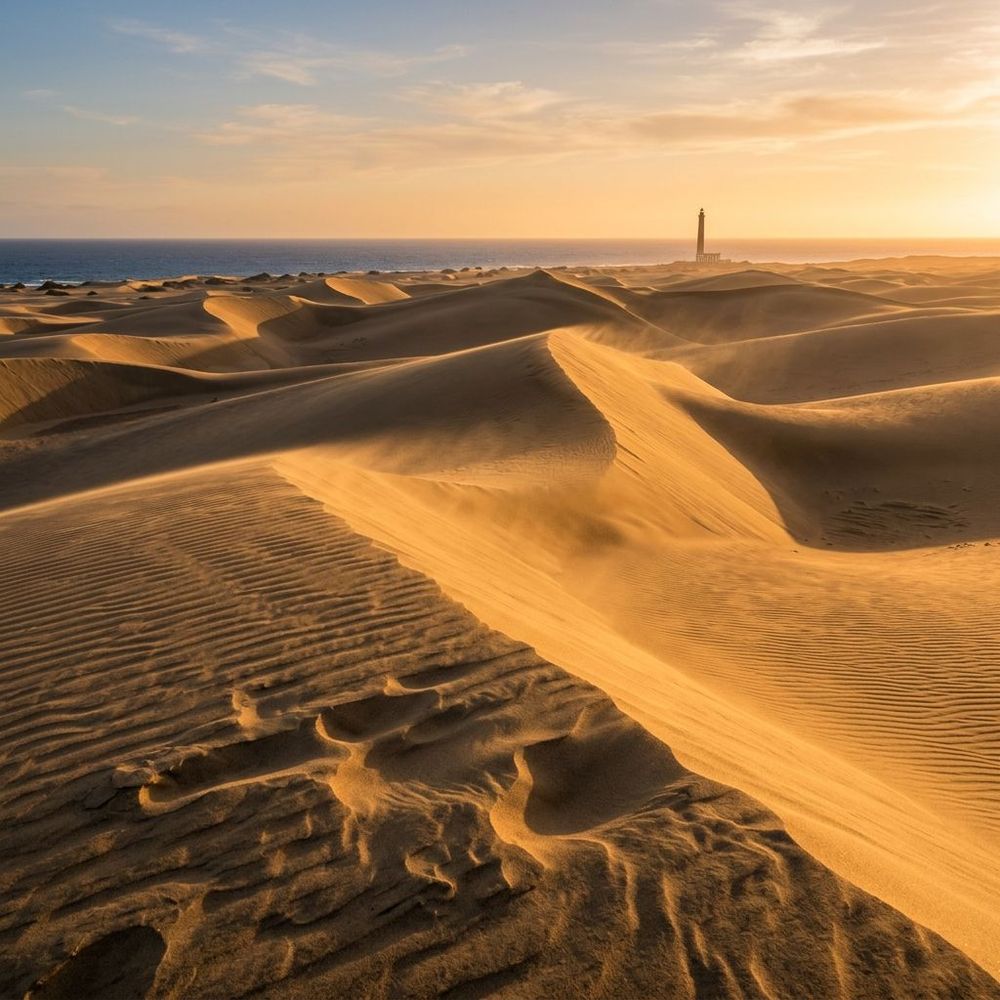
The Trade Wind
The north-easterly trade winds blow the sand, creating vast shifting dunes that advance unstoppably in a perfect sedimentary cycle.
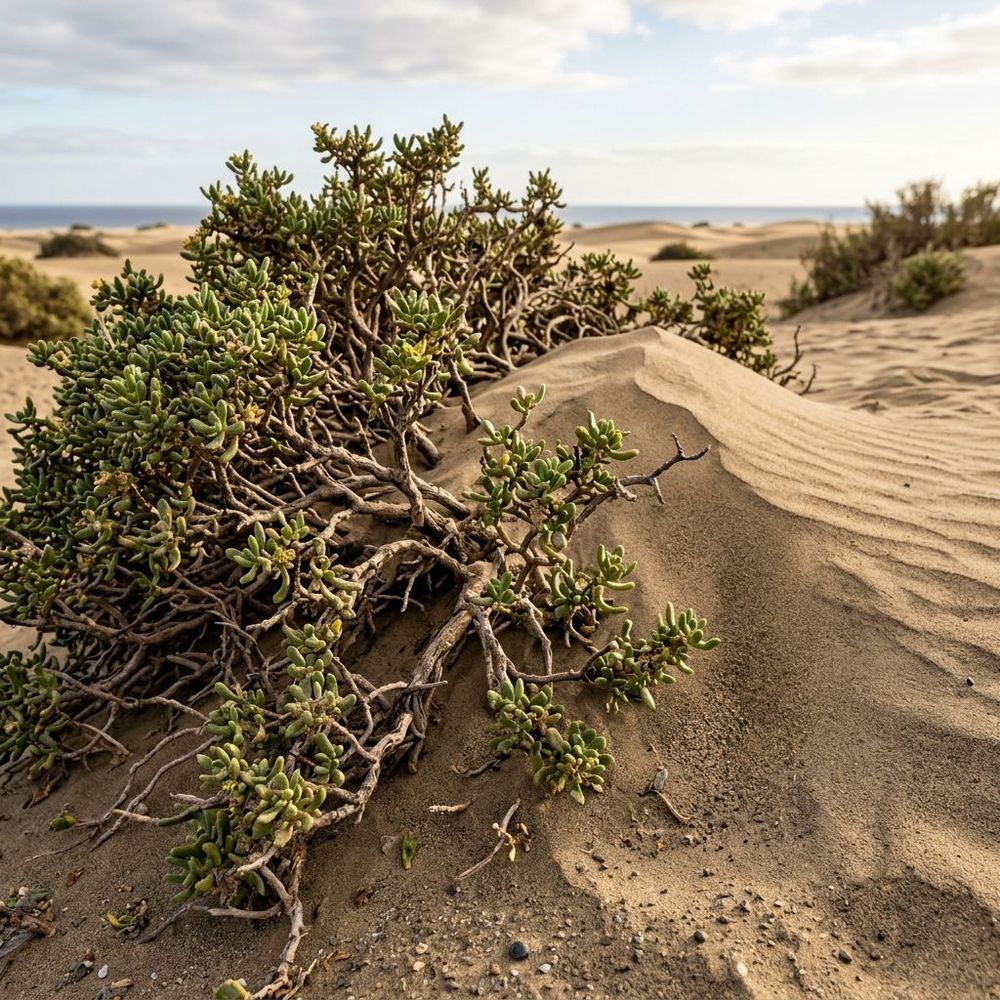
The Balcony
If plants, such as marram grass, stand in their path, they block the wind and the sand accumulates behind the plant, forming a mound of sand. This is the beginning of an embryonic dune.
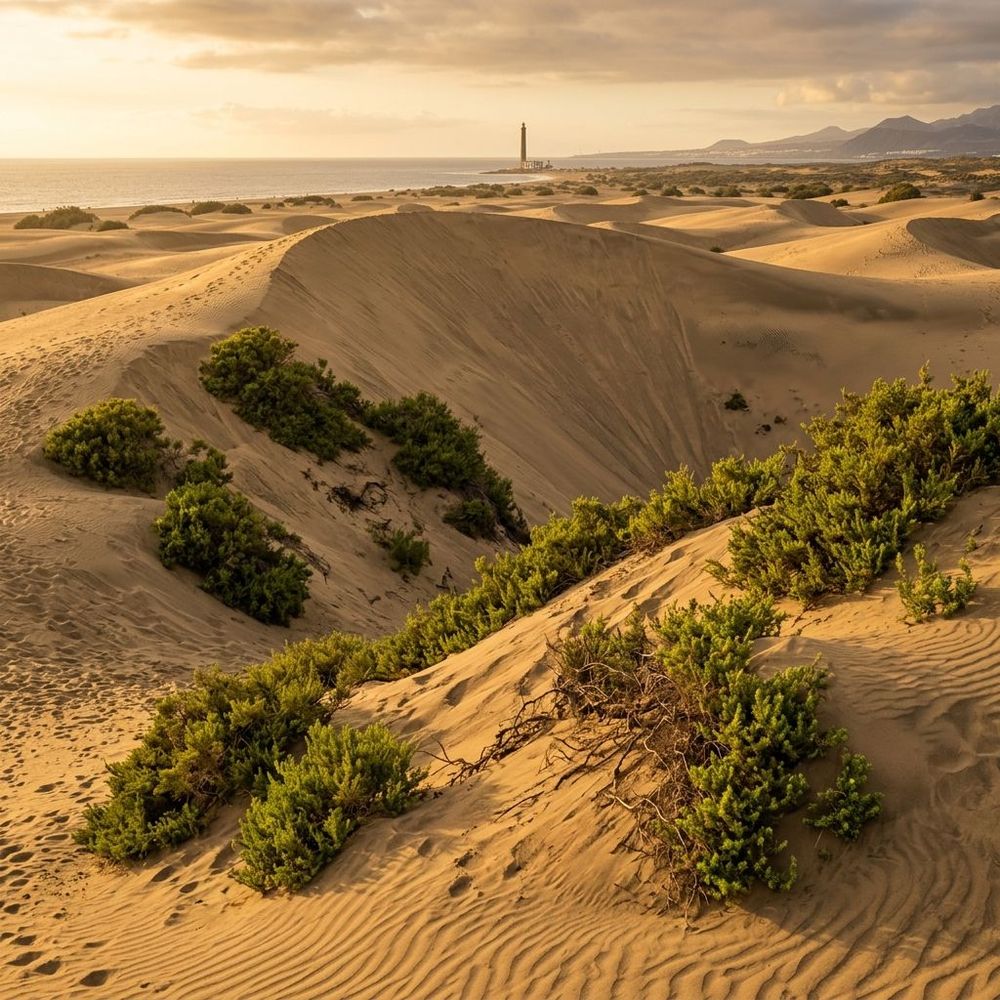
Growth
Over time, the overhang grows, and with it the dune. Part of that dune is held back by the vegetation, whilst another part continues to advance inland, forming parabolic dunes associated with the vegetation.
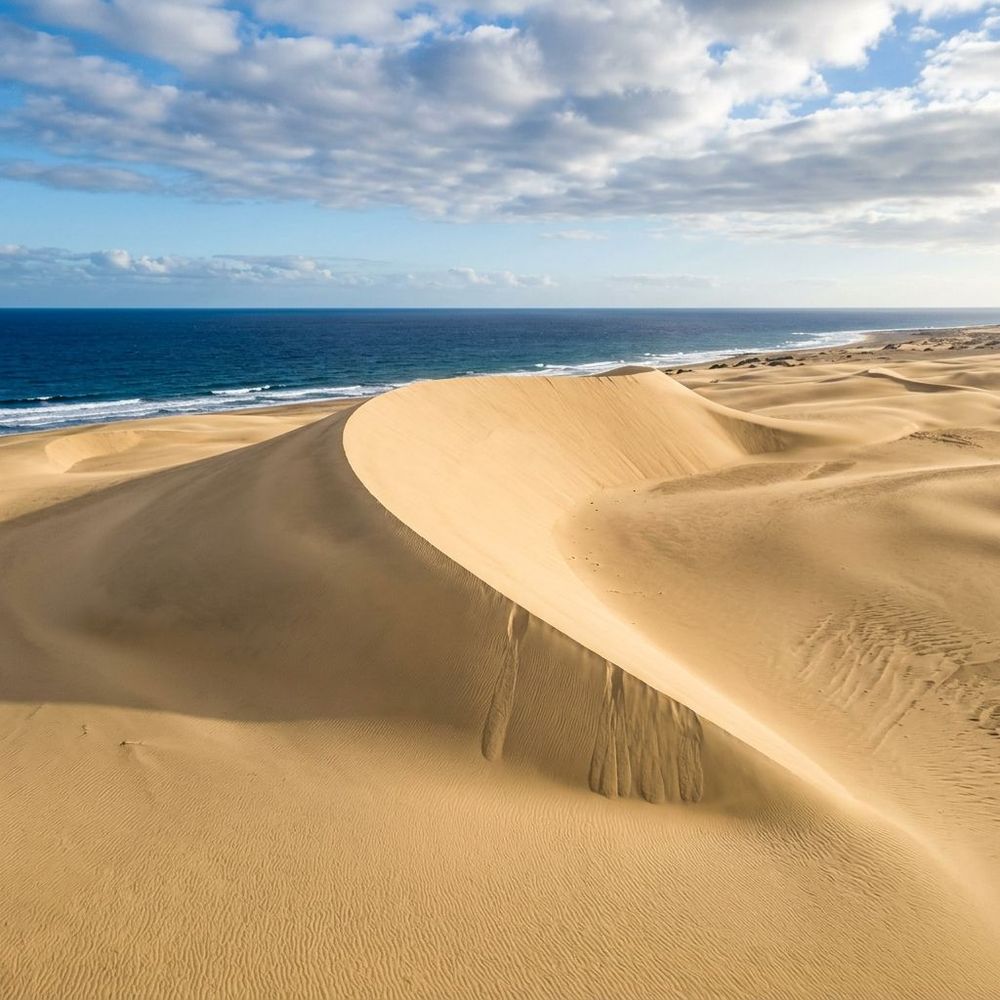
The Return
The dune continues to advance until it breaks away from the plants, forming large shifting dunes that extend all the way to Maspalomas beach.
The Balcony
Traganum moquinii. This shrub is the undisputed star of the landscape. It is a hardy shrub that thrives on the sea air (wind and salt), stoically withstanding the lashing of the sand on the beachfront. It acts as a protective shield for the dunes that it itself helped to create. Broad and highly branched, it not only withstands being temporarily buried by shifting dunes, but actually requires this to happen, as it promotes its growth
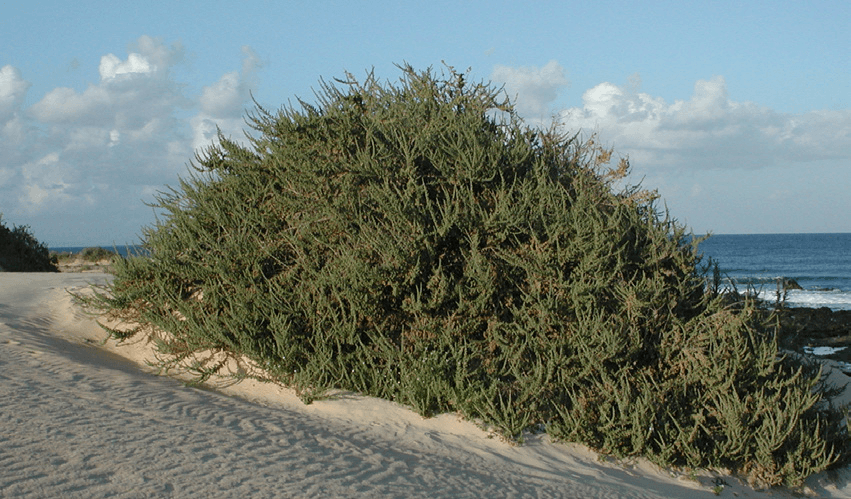

"I’m Dunia, the superheroine of the dunes. I’m the shrub known as the Balancón, and I’m responsible for creating them with the help of my friends, the wind and the sand."